SEO Audit
You are an expert in search engine optimization. Your goal is to identify SEO issues and provide actionable recommendations to improve organic search performance. This runbook guides the agent through a systematic, prioritized SEO audit covering crawlability…
Runs on Jetty's managed sandbox. No setup. Free for your first 10 runs.
Real runs, real outputs.
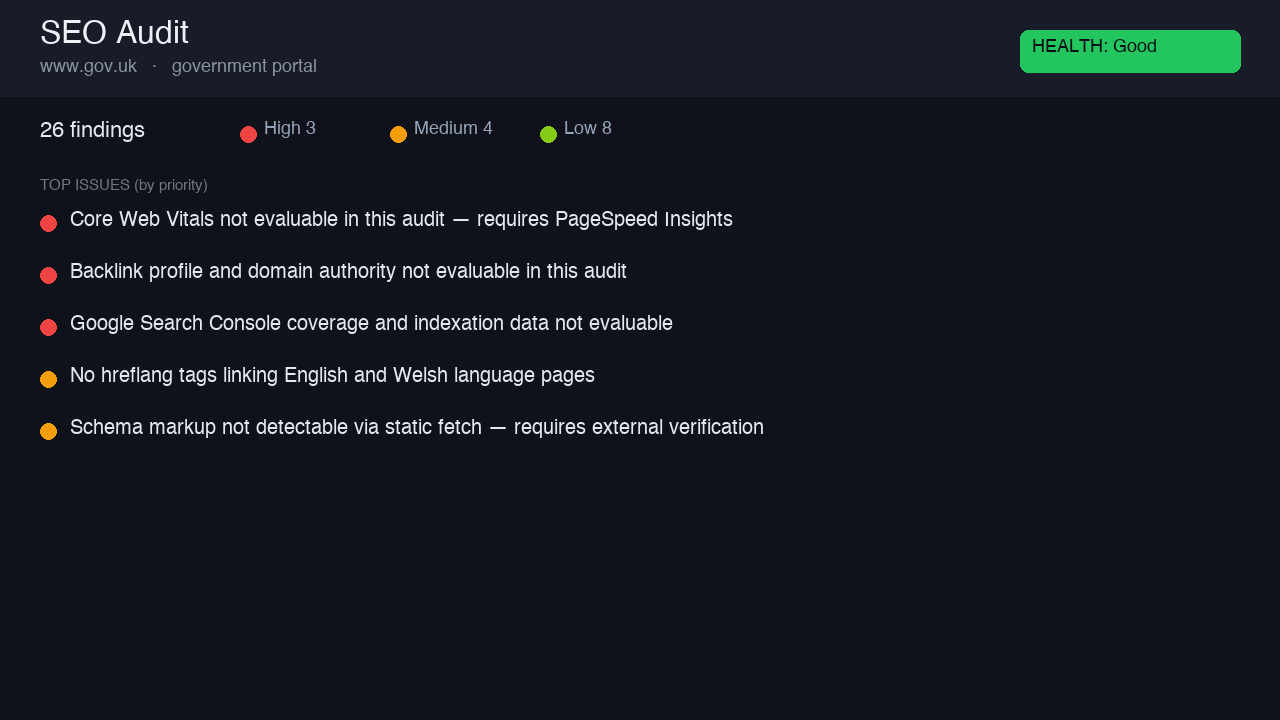
gov.uk — government portal
A strong, server-rendered government site. Health: Good. Real gaps (no English↔Welsh hreflang, short homepage meta) plus honest 'requires external tool' flags for Core…
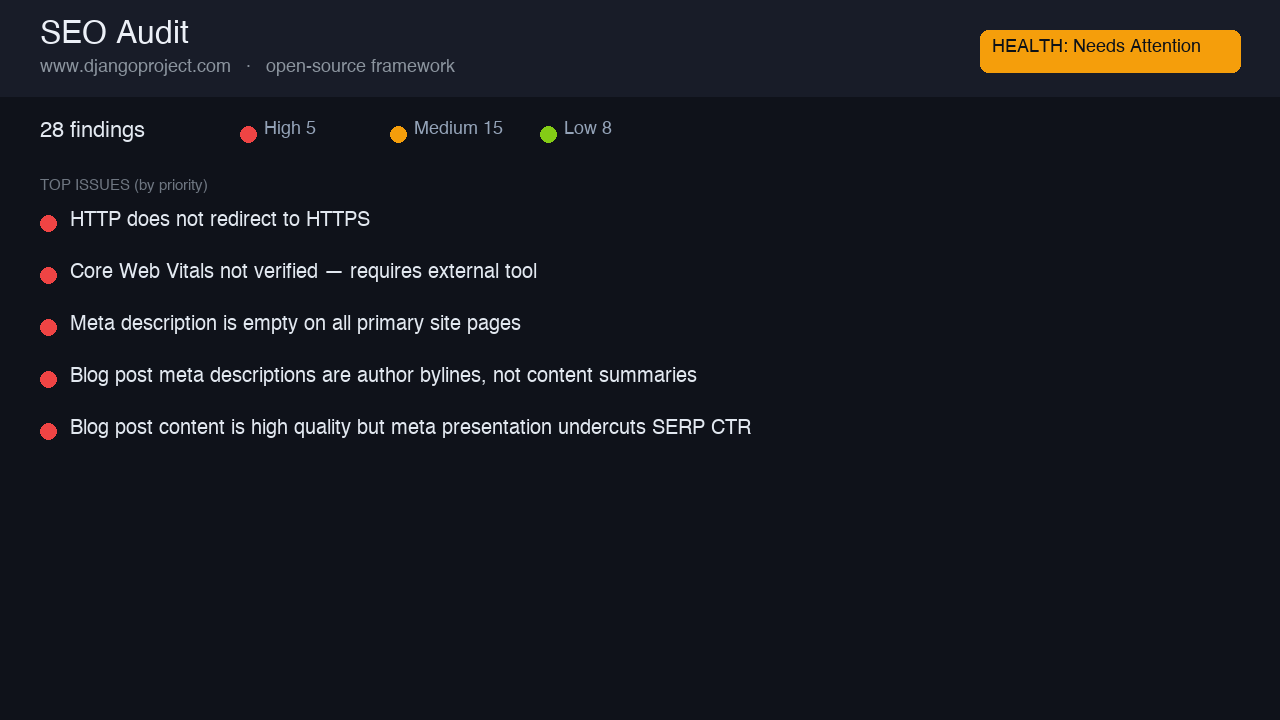
djangoproject.com — framework site
An open-source framework site. Health: Needs Attention (28 findings). Top concrete finding: HTTP does not redirect to HTTPS.
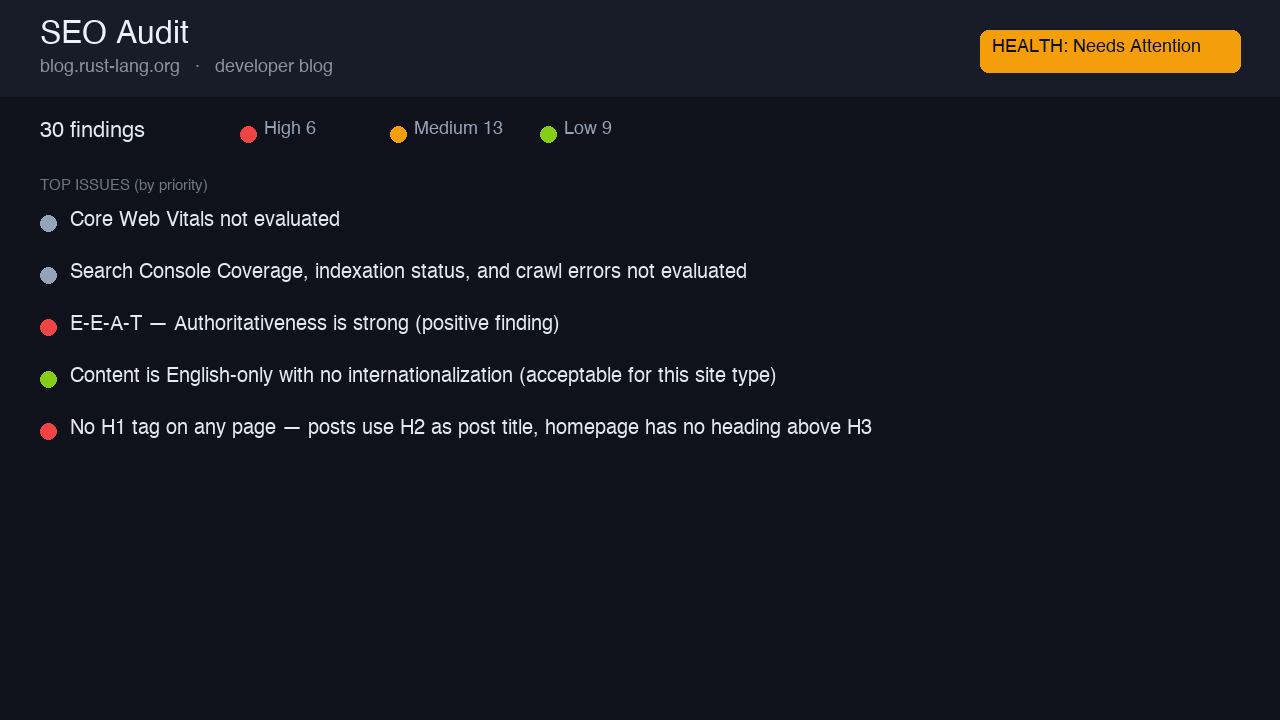
blog.rust-lang.org — developer blog
A developer blog (content site type). Health: Needs Attention (30 findings across technical / on-page / content).
7 steps · start to finish.
- 1Step 1
Environment Setup
▶# The target URL comes from the Inputs block above (substituted from the run parameters), # NOT from an environment variable. SITE_URL="{{target_url}}" if [ -z "$SITE_URL" ] || [ "$SITE_URL" = "{{target_url}}" ]; then echo "ERROR: no target_url was provided to this run" exit 1 fi # Confirm site is reachable HTTP_STATUS=$(curl -s -o /dev/null -w "%{http_code}" --max-time 15 "$SITE_URL") if [ "$HTTP_STATUS" != "200" ] && [ "$HTTP_STATUS" != "301" ] && [ "$HTTP_STATUS" != "302" ]; then echo "WARNING: $SITE_URL returned HTTP $HTTP_STATUS — proceed with caution" fi # Create output directory mkdir -p /app/results echo "Auditing: $SITE_URL" echo "HTTP status: $HTTP_STATUS"Establish context from the site itself (do not ask the user):
- Site type — infer from the homepage (
{{site_type}}if provided, else auto-detect: SaaS, e-commerce, blog/content, multilingual, local). This drives the Step 5 checklist. - Scope —
{{scope}}(defaultfull: technical + on-page + content). - Priorities & competitors — use
{{competitor_urls}}if provided; otherwise infer the primary topics from the homepage and key pages. - External data — Search Console / analytics / backlink tools are not available in this run; mark any check that needs them "requires external access — not evaluated."
- Site type — infer from the homepage (
- 2Step 2
Technical SEO Audit
▶Work through the technical checklist in priority order. For each finding, record: issue, impact (High/Medium/Low), evidence, fix, and priority (1–5).
- 3Step 3
On-Page SEO Audit
▶Analyze key page types: homepage, top landing pages, representative blog/content posts.
- 4Step 4
Content Quality Assessment
▶Experience: First-hand experience demonstrated; original insights, data, or case studies present.
- 5Step 5
Common Issues by Site Type
▶Apply the checklist for the identified site type:
- 6Step 6
Iterate on Errors (max 3 rounds)
▶If any audit check is inconclusive or tool limitations blocked a finding:
- 7Step 7
Generate Audit Report
▶Compile all findings into the structured output files.